 Timeshare Sales Training

Most reps treat the meet and greet like a first impression and the warm-up like a list of questions. Kaleo McCabe teaches it differently. The meet and greet is about frame control, the warm-up is about an honest conversation, and the questions matter less than listening and mirroring. As Kaleo puts it, the better he got at his front end, "the easier the rest of the presentation became."
This is lesson one of the front end in Kaleo's free Basics class. Here are the three myths he breaks, and what he does instead.
Why the front end matters more than the pitch
People like the pitch. People like closing. People like the back end. But Kaleo, a former trainer who still leads a sales floor and is on tables daily, puts it this way: the better he got at his front end, the easier everything after it became.
The front end has three parts: the meet and greet and warm-up, the order of the day and intent, then discovery and information confirmation. This post covers the first one.
Myth 1: "You have to make a good first impression"
You have heard it: there is never a second chance to make a first impression. Kaleo understands where that comes from, but his focus is different.
"It's not about the impression, it's about your frame control."
Frame control is who you are, status-wise, compared to the person next to you. On a front line, that does not mean acting important. It means a quick, warm, confident start: "How you doing? Welcome... it's beautiful, love to have you here. Is it all right if I call you by your first names?" And you go right into it.
What he sees go wrong most often is reps being too subservient. You say hi, and the guests walk right past you. Instead:
- Be quick. Say hi, "come on with me," and walk. Make sure they are following you.
- Keep your energy just above theirs. Guests usually follow your energy, a step behind. If yours drops, theirs drops. Stay a bit more excited than the people in front of you, not miles ahead.
- Give them a reason to listen. Kaleo is from Hawaii and would bring out his Hawaiian Pidgin on tours as a curiosity hook. If you have an accent or a story that makes you different, use it. Guests on vacation want something authentic.
- Run your space. Guide them to where they sit. "The moment they start dictating control of things, you lost your tour." Can you turn it back? Yes, but it is very hard. Leading the way is how you take care of them.
Myth 2: "Just make a friend"
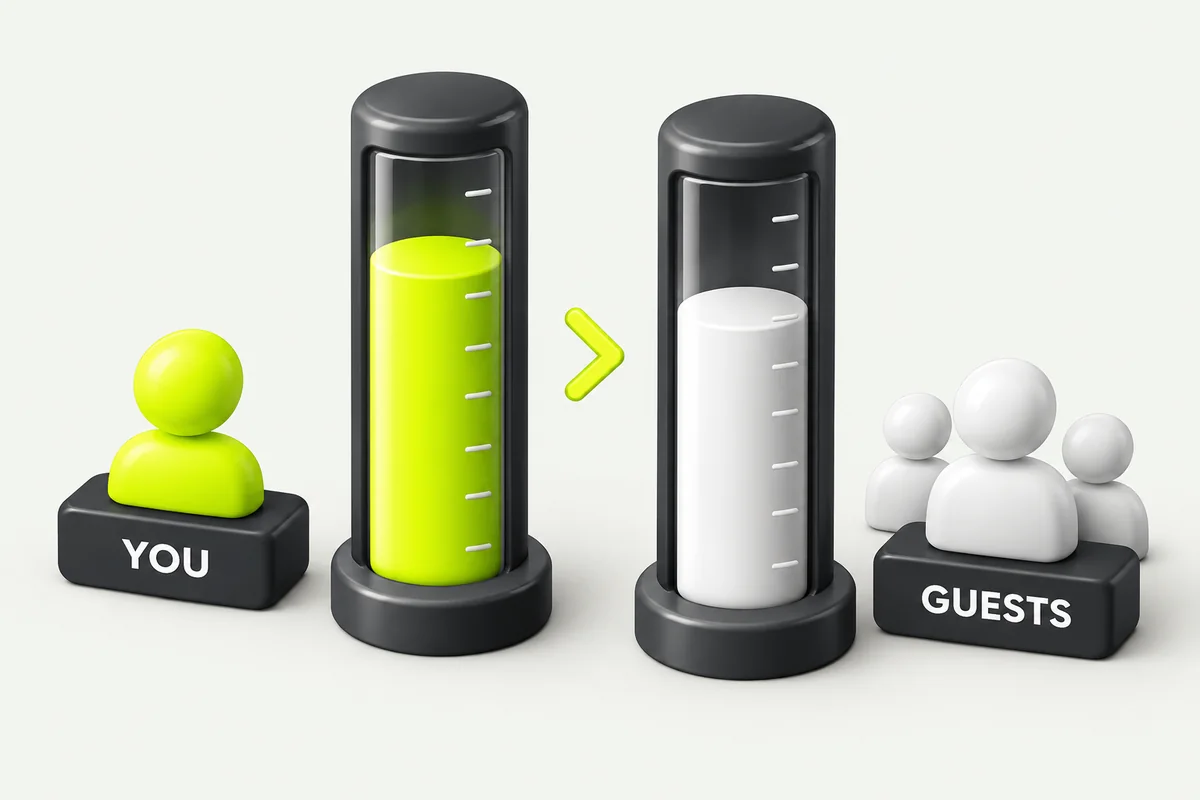
For a lot of reps, "make a friend" means being nice. Kaleo wants something better: an honest conversation.
His analogy: there are two kinds of friends. One sees something on your face and says nothing so they don't seem rude. The other says, "Hey, you have something on your face, let's clean that up." Be the second one.
"You want to be the friend that is honest about things with the people in front of them, so they can be honest back with you."
That carries all the way through the tour. Later, when you think the way they are doing things is not right for them, the honest friend says so.
How to tell they are really open

People laugh at jokes with people they are not opening up to. Think about how many times you have done that. So laughter is not the signal.
The signal Kaleo looks for: guests pulling out their phones or their wallets to show you things. When people start sharing positive memories, getting nostalgic and showing you what matters to them, you are in an honest conversation. That is when you can move on.
Myth 3: "I need the right warm-up questions"
Reps ask Kaleo for the best warm-up questions all the time. His answer: it is not about the questions. It is about listening and observing for value cues, and mirroring.
Mirroring means repeating what the guest says, with the same words they used. When you do, they feel heard and understood, and they open up more.
Here is his example. You ask where they are visiting from, and they say "Kentucky."
- Okay: "What's it like there?"
- Better: "Kentucky? What's that like there?"
The second version proves you heard them. Then, when they say "It's amazing," you mirror again: "Amazing? How do you mean?" Their idea of amazing might be very different from yours, and now they tell you.
Kaleo says he mirrors almost all the time. It means he does not have to think about what to ask next, and everything he says matches what they are saying. The more you mirror, the more rapport they feel, and the deeper you can go when you get to discovery.
The point of the whole warm-up

You cannot go second, third or fifth level with someone the moment you meet them. The meet and greet and warm-up exist to get the guest open enough for the deeper conversation that comes next. Frame control gets you their attention. Honesty gets you their trust. Mirroring keeps them talking.
To recap Kaleo's three switches:
- First impressions, switch to frame control.
- Making a friend, switch to an honest conversation.
- Warm-up questions, switch to listening for value cues and mirroring.
Keep training with Kaleo
This lesson is the first video in the free Basics class inside Kaleo's Skool community, followed by the order of the day and discovery. You can also join the weekly live call and work through a real tour with him.
Join the free Timeshare Sales Training community on Skool, or get the free training by email.