 Timeshare Sales Training

Rent vs own is a side-by-side that you run after the vacation calculator. You confirm the guest already plans to spend the money, ask why it matters to them, show what they have left when it is spent, then contrast that with ownership and let them tell you why ownership fits better. Done well, the guest says the important parts out loud, and you are not pushing anything.
Kaleo McCabe, a former trainer who still leads a sales floor and is on tables daily, teaches this inside his free Basics class. He says he built his version from what a mentor taught him and then trimmed it to his own style. Here is how it goes, step by step.
Start with a strong calculator
Rent vs own only works if the vacation calculator before it is solid. Kaleo is direct about this.
"You must have a strong vacation calculator, those commitments, before we get in here. If you do a soft commitment here, you're going to do a hard commitment here."
The calculator is where the guest commits to what they spend on vacations now. Rent vs own builds on that same number. If the commitment up front is shaky, everything after it wobbles.
Step 1: Tie them to the number they already gave you
You open with something simple: you know they are going to spend that money anyway, so you share why owners choose ownership instead of continuing to rent the way they do now.
Kaleo calls this his big domino. At the end of this piece, the guest should be sold on the concept of ownership. The product does not matter yet. You have not shown it.
Then you recap what they told you earlier: how they travel now, what they spend, and what that adds up to over the years ahead. Ask "is that correct?" and get a yes.
Step 2: Ask why, and keep asking
Now you ask the real question. "That is a lot of money. Why is it important to you?"
They will say they want to see the world, take trips, get away. Keep going. Kaleo's point is that you let them keep talking until they land on the heart of it, which is usually the memories and what those memories mean to them. Then you affirm it: it is worth it, and that is why they are committed to spending it on vacations either way.
By his count he has tied them to that number three or four times by now. That is not trickery. It is the guest repeating, in their own words, what they already decided matters.
Step 3: Show what they have left

Next comes the honest part. Kaleo asks how much of that money they have left at the end. The honest answer is nothing but the memories.
Then Kaleo asks: "Knowing you're going to end up with nothing, is it still worth it?" They will say yes, because of the memories. Good. He leaves it there: it is an expense they are willing to make, and it is fine to say so.
Step 4: Show the contrast
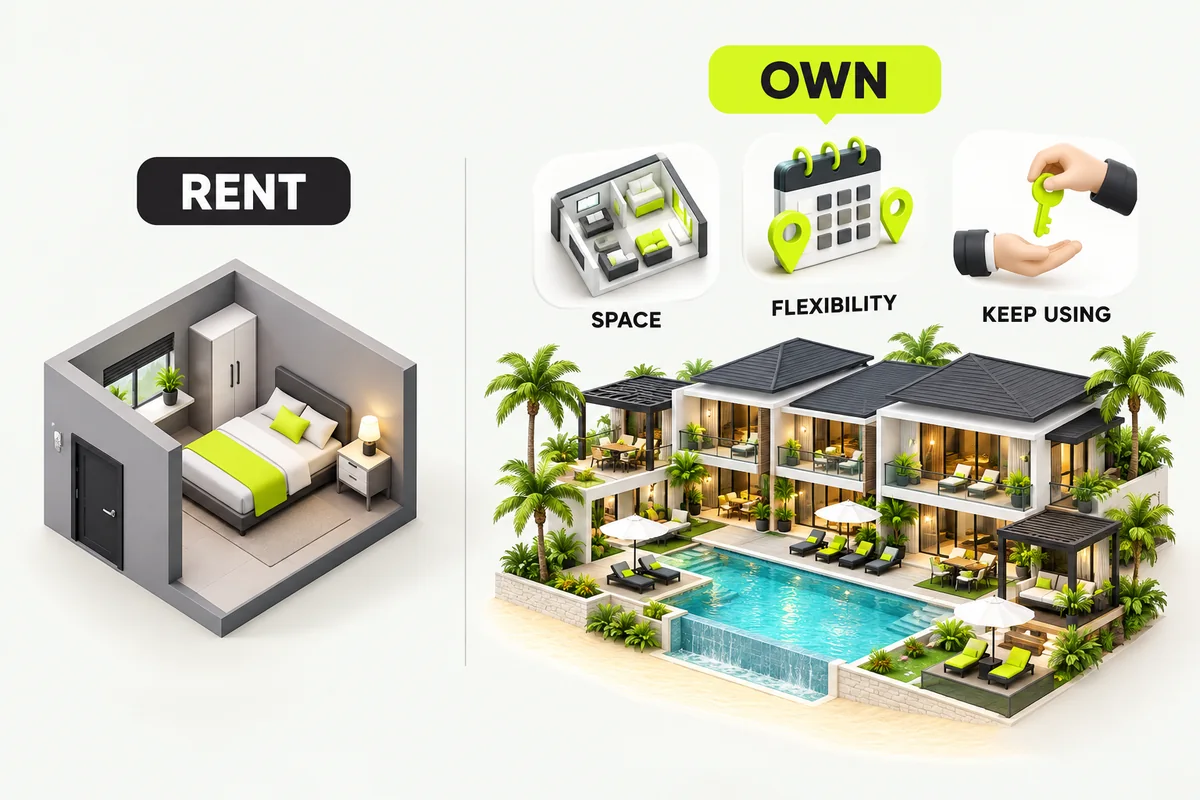
Now you share why people choose ownership. Kaleo builds the contrast around three ideas.
Space. Renting often means one small room. Ownership can mean a larger unit. He asks: "If it was the same money, and you could stay in that or one of these, which would you prefer?" Then he asks why, and lets them list their reasons.
Flexibility. He names the old problem honestly: older timeshare meant the same place at the same time, over and over, and that did not match how people travel now. Would they want that? No. So he shows how the program is designed to fit the way people travel today, with more choice of places, times, unit sizes and length of stay than the old fixed-week model. Then he asks, "Would you still be able to take those vacations the same way? Would you still have those memories?"
Something you keep using. The difference, Kaleo says, is that one side ends when the trip ends; the other is a vacation plan you keep using, can share with family, and can pass on.
Then the summary question: same money, same way of traveling, which is the better use of your vacation dollar? They will pick ownership, and then comes the most important part.
Step 5: Ask why again
"Anytime you get the answer you want, the question behind that is why."
Why does that matter to you? If they do not say anything specific to ownership, Kaleo pushes back gently: you can do that renting too, so what is it about this side that is better? Make them tell you. When they do, they should have the belief.
Now you can check where they are with a soft trial close: if the money they already plan to spend could go toward ownership instead, does that make sense for them? Some guests will hesitate. Kaleo does not argue. He reminds them, kindly, of what they told him earlier about spending that money anyway, and asks what is on their mind. That question is where the real conversation starts.
He is clear that this is where you want the commitment to the belief, before any product is shown.
The one belief that matters

Kaleo boils the whole section down to one belief the guest needs: I am going to spend this money no matter what, and ownership makes more sense if I am spending it anyway.
The five steps, in order:
- Tie them to the number they already gave you.
- Ask why, and keep asking.
- Show what they have left.
- Show the contrast.
- Ask why again, and make them be specific.
He also says you can do all of this right on the vacation calculator. Some reps like to write it out, and he sees a benefit to that for the right guest.
If the guest gets hesitant or walls up, he does not defend the product. He reminds them he has not even shown the program yet, and asks what specifically they would want to know about it. That way he covers what they care about instead of everything.
Why this is love and serve, not pressure
Every step above is a question, and every answer comes from the guest. You are not telling anyone what to feel. You are showing them what they already said and asking whether the other way makes more sense for them. If it does not, that is a real answer, and a good one to have.
Train with Kaleo
This is part of the economics section of the free Basics class in Kaleo's Skool community. You can also join the weekly live call and practice a real tour with him.
Join the free Timeshare Sales Training community on Skool, or get the free training by email.